


Less than 24 hours before my wedding, I needed a barber. The barber I had grown up with was sick. I was about to get married, and getting a haircut had suddenly become a problem. Thankfully, I reached another barber who was available. He took care of me and saved me from looking shabby on my wedding day.
That was the story I told when I was asked about my own barbershop experiences at Nativity Prep. The question was about a funny conversation in the chair. What came to mind was someone being there when I needed him.
It seems like a good place to begin this story.
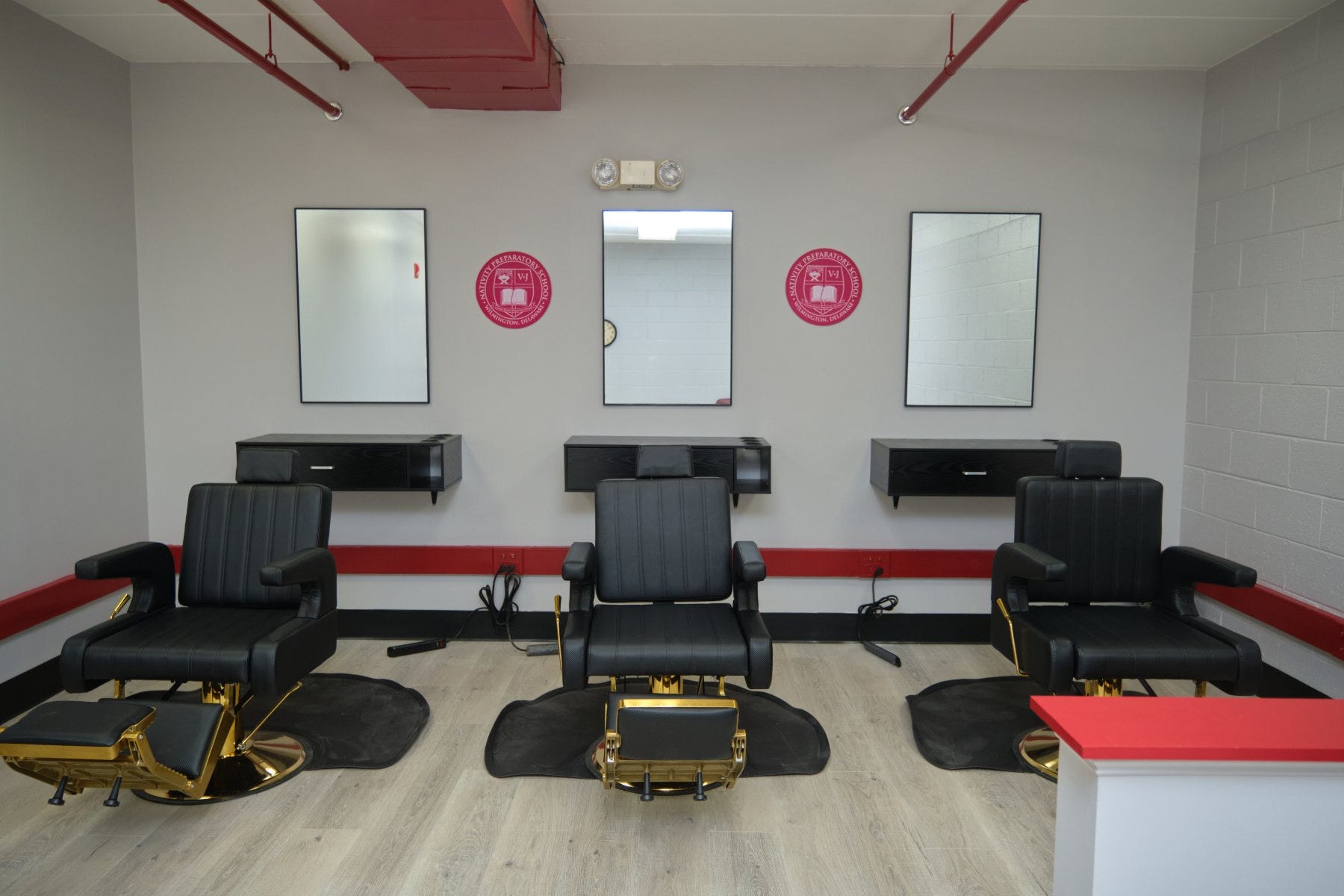
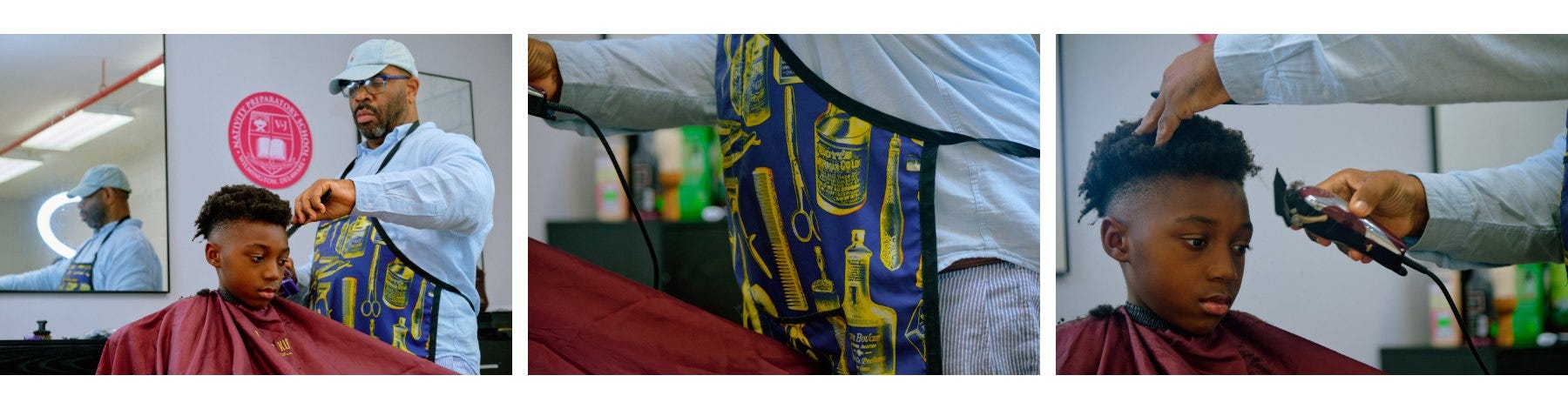
I photograph at Nativity Prep, and seeing a barbershop inside the school felt amazing to me. The idea is so direct: students can come down, get a fresh cut, talk with the barber or another student, and feel good. If the day hasn’t been going well, this could be something that helps turn it around.
As a photographer, that’s the possibility I want these pictures to hold: the care behind the haircut, and what it might mean to the boy receiving it.
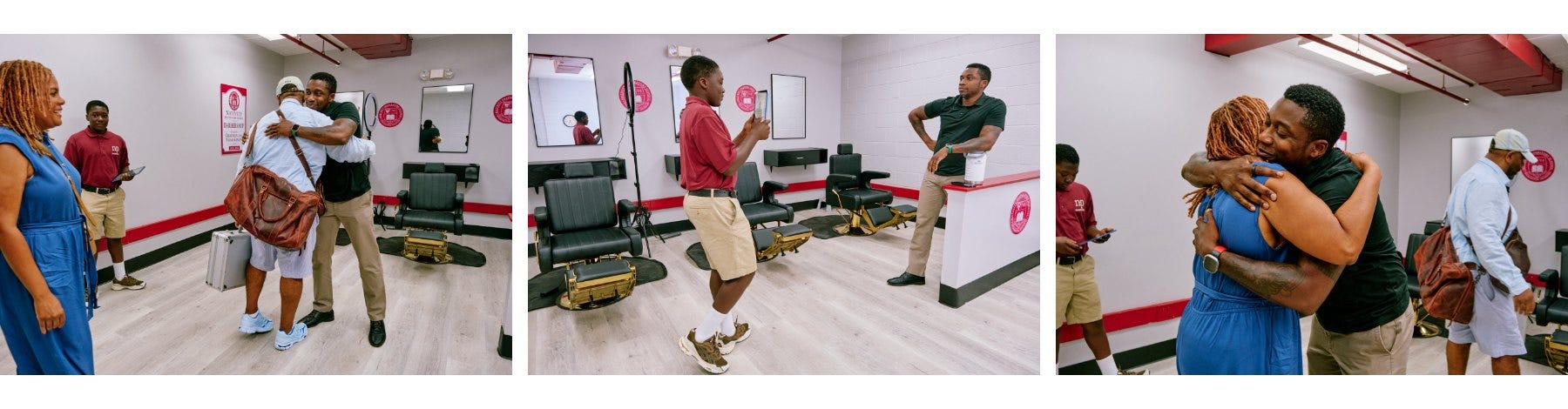
The school’s president, Dr. Tony Alleyne, understands that feeling personally. Growing up as a Black male in New York, he associated a fresh cut with confidence. When he became president of Nativity, he wanted the boys to have that experience without having to pay for it.
“I wanted to give that sense of confidence to the boys at no cost,” he said.
The plan is for students to have the opportunity to get a haircut every two weeks. Dr. Alleyne spoke about the rising cost of everyday life and what it would mean for families to have that taken care of at school. He also wanted a place where boys could have the kinds of conversations that happen in a barbershop, where they could relax and talk about things they might not bring up at home.
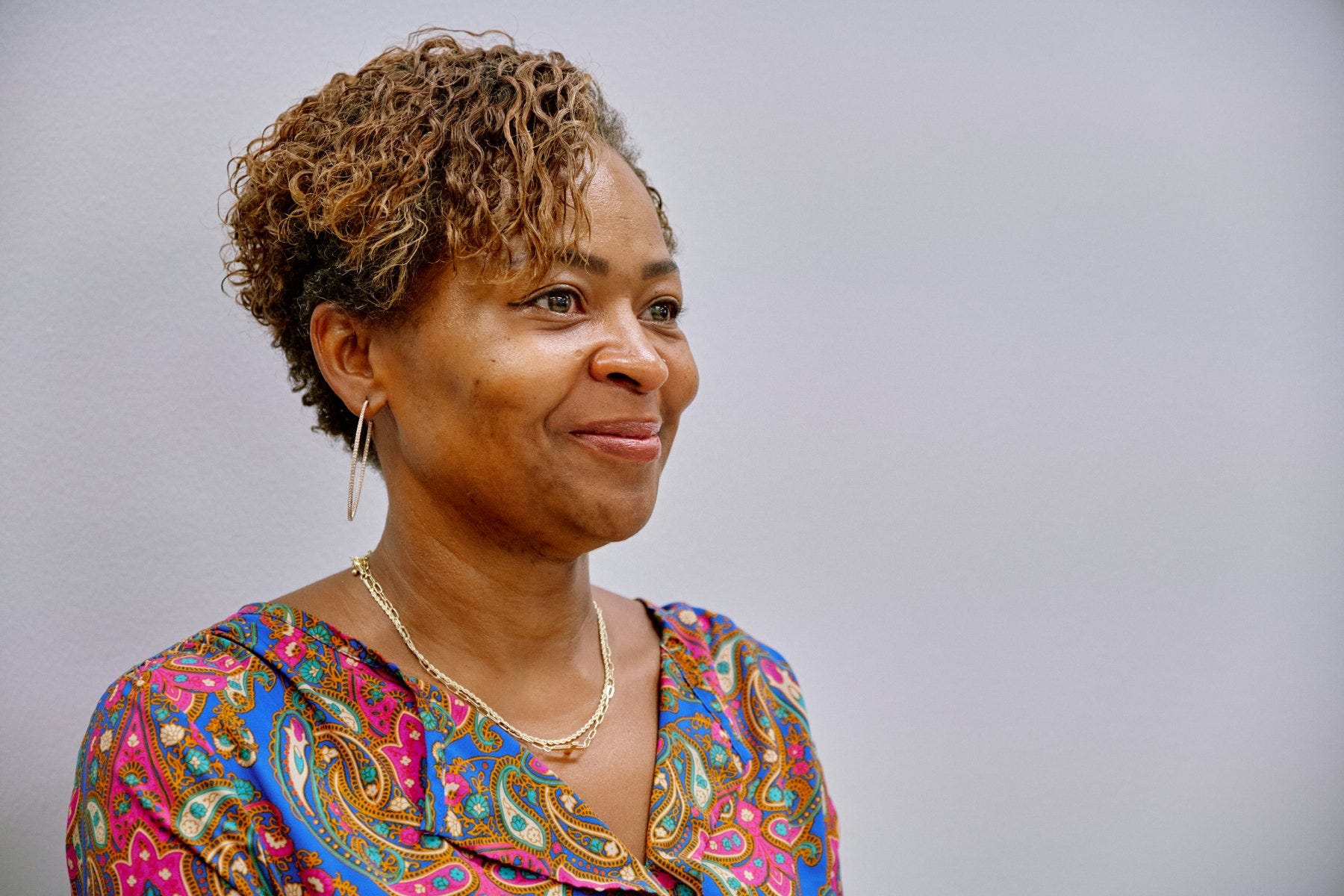
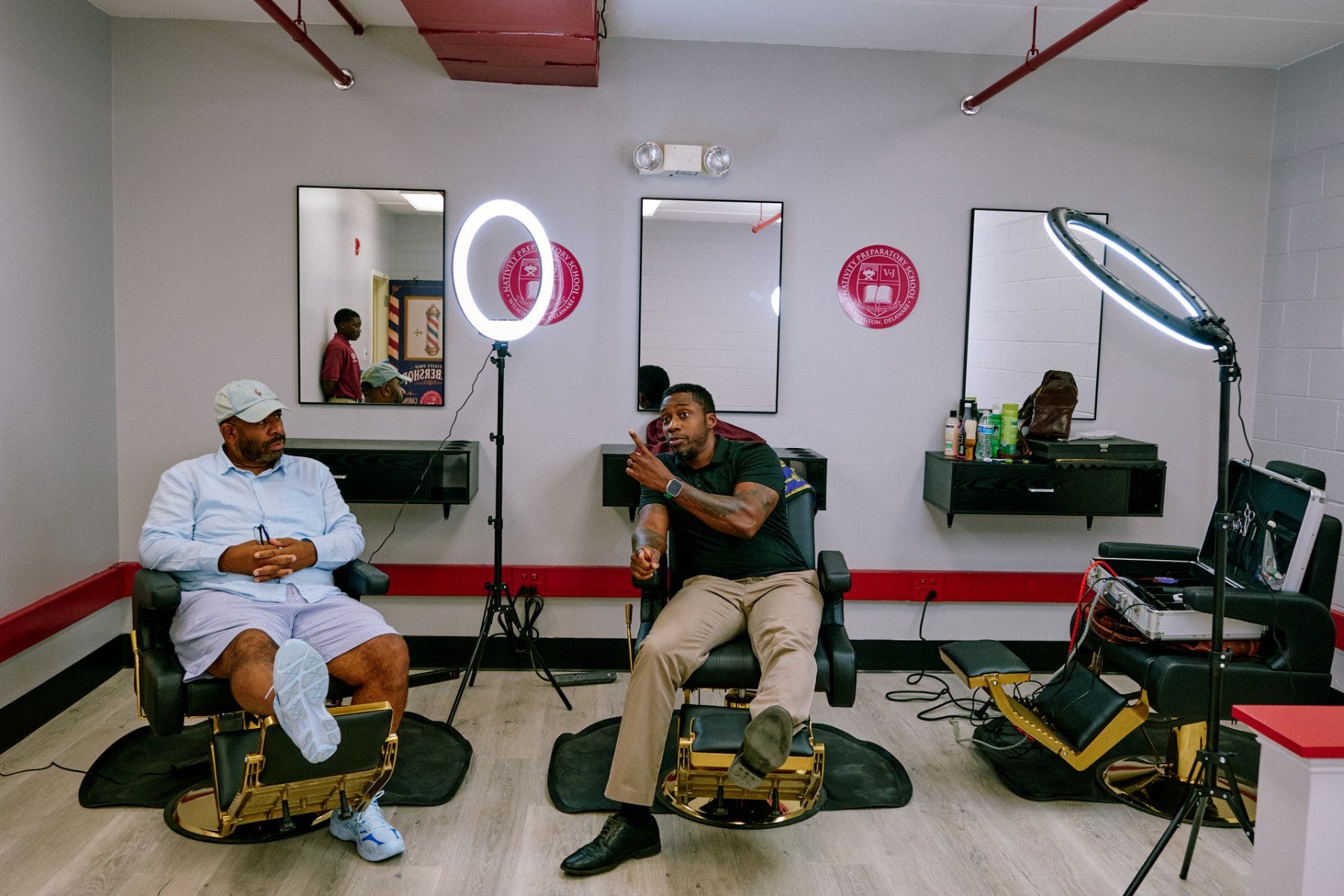
Dr. Herbert shared the vision. She described a collective desire to give the school’s fifth- through eighth-grade boys a place to sit down, get their hair cut, and connect with someone.
Then a conversation in a barber’s chair helped move the idea forward.
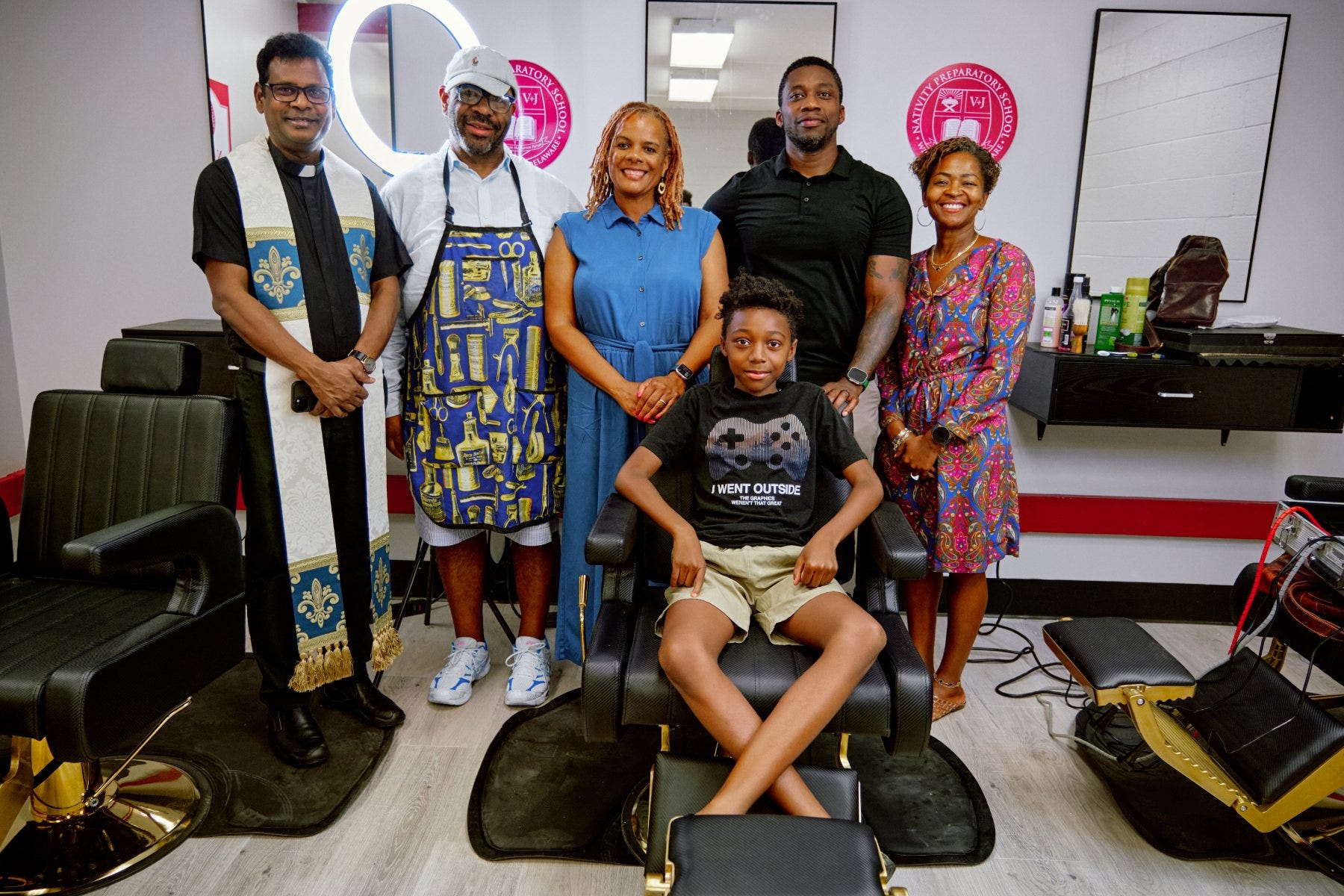
Dr. Alleyne began asking his own barber, Gray Gibson, what it would take to put a barbershop in the school. What would it cost? How could it work? At first, Gray was simply answering a customer’s questions. As he realized how serious Dr. Alleyne was, he began thinking more seriously about how he and his wife, Naima, could help.
Their support helped turn the space into a barbershop. Naima explained their reason simply: they believe in education and wanted to be part of it.
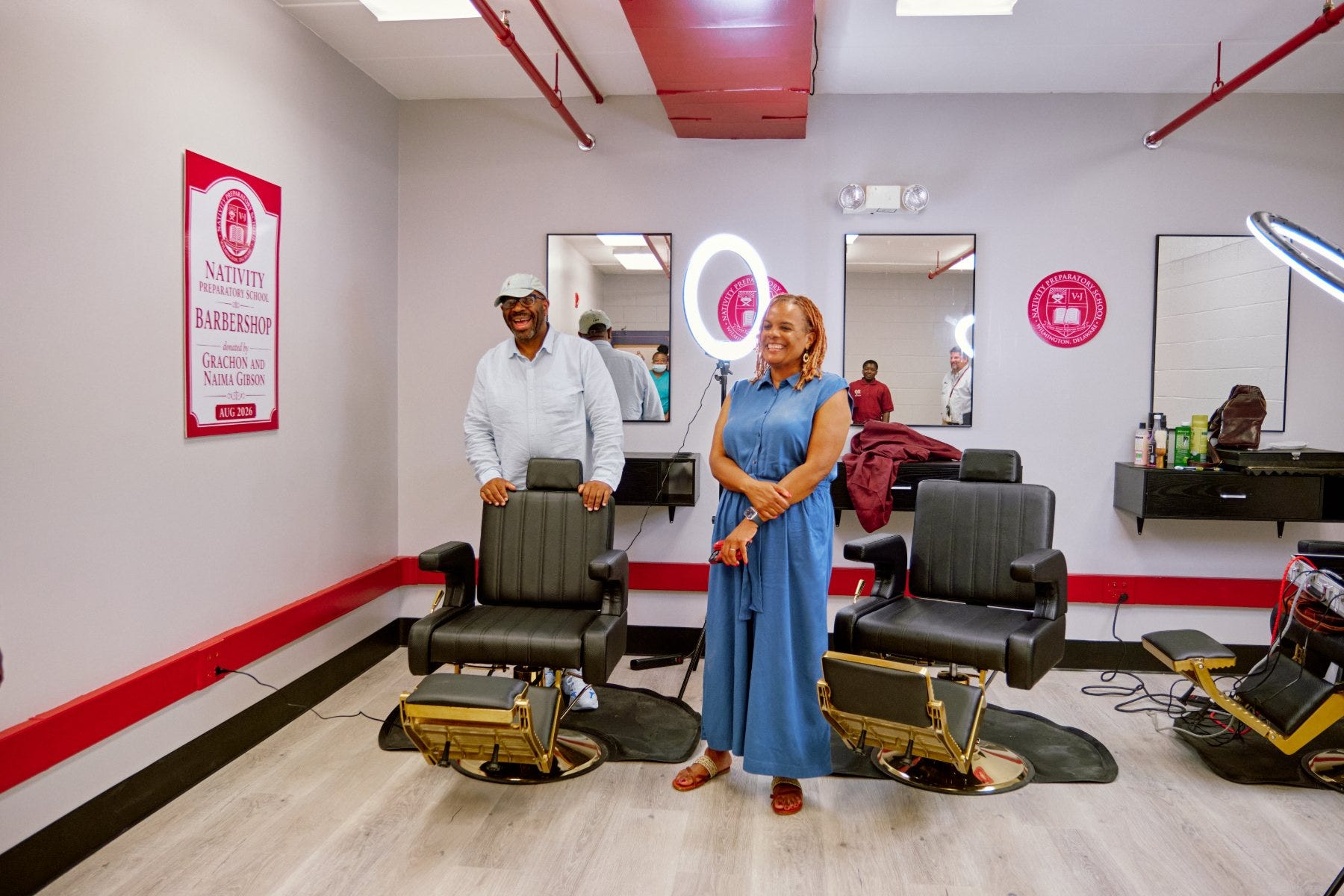
I like that the story of this room includes the very thing it is meant to make possible. Someone sat down for a haircut. A conversation opened up. Another person paid attention, and something grew from it.
Gray’s description of his work stayed with me. He pays attention to the person in the chair. Are they in the mood to talk? What’s bothering them? What’s making them happy or sad?
And if they don’t feel like talking?
“You sit quiet and just work.”
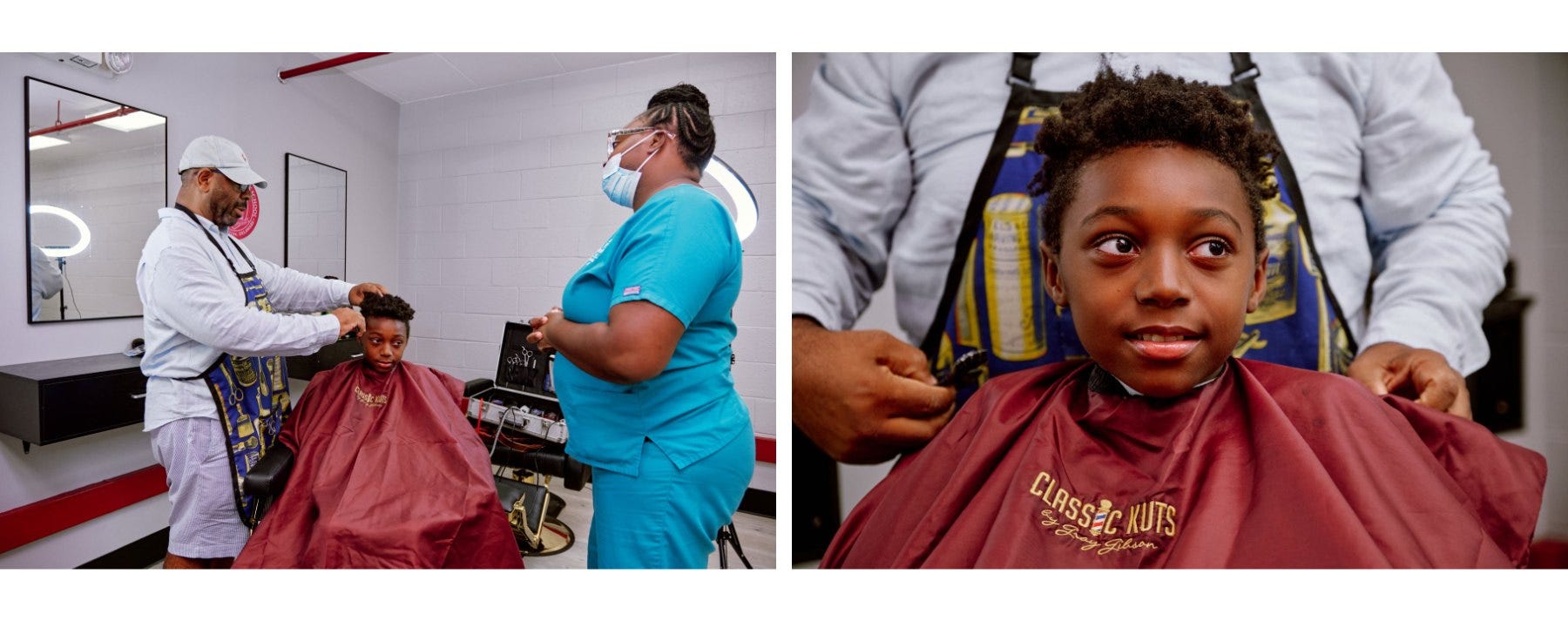
There is care in that, too. Giving someone your attention can mean making room for their words. It can also mean letting them be quiet.
Dr. Herbert offered another way to understand that connection. When her son was smaller, the noise and buzzing in a barbershop frightened him. Being able to sit down and connect with the barber changed the experience. She remembered him smiling from ear to ear. Now, she said, he gets his hair cut every two weeks.
That story gives a little more meaning to the chair. For a child, feeling comfortable with the person standing beside it matters.
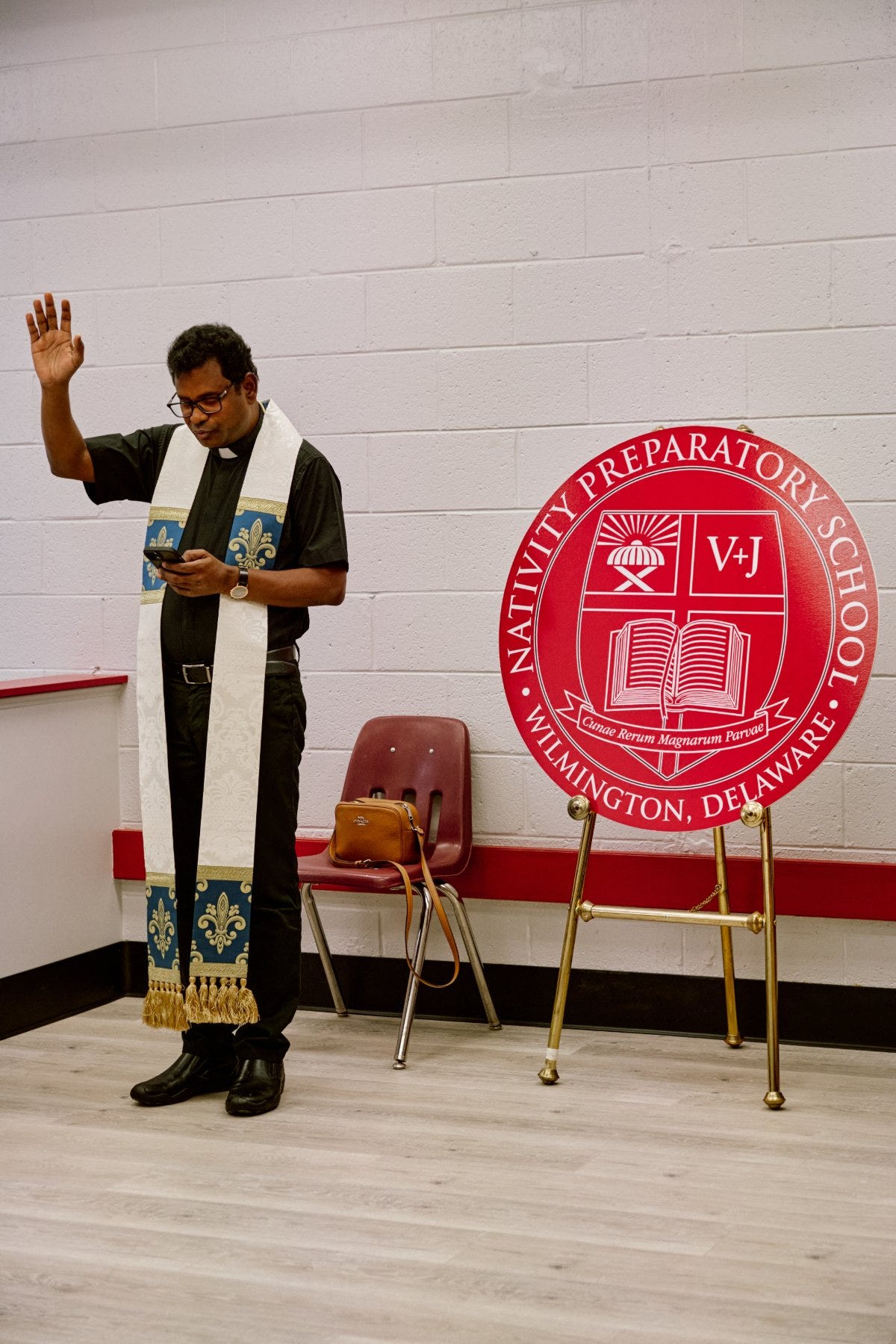
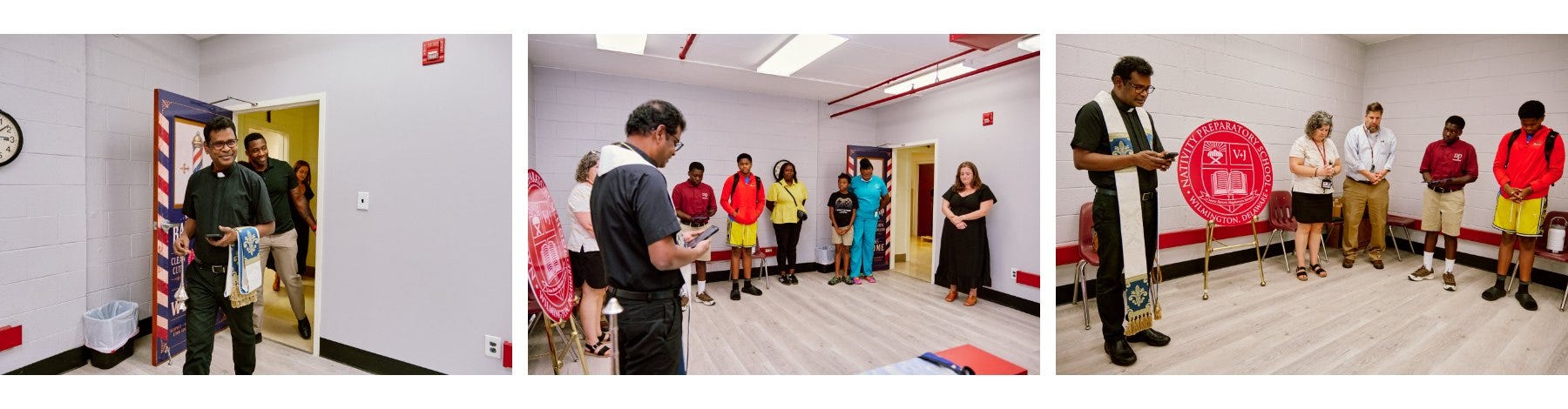
The blessing of the new shop put words to what people hoped would happen here. It included the doors, walls, chairs, tools, and the hands of those who would work in the space. It asked that people feel welcomed, respected, heard, and encouraged. That conversations might help lift burdens. That someone could leave feeling valued.
Those are large hopes for an everyday activity. But the people speaking about this shop kept bringing them back to ordinary, practical things: a haircut a family doesn’t have to pay for, a chance to talk, a little more confidence going back to class.
One teacher described offering encouragement when a student seems uncertain about a new haircut. A student talked about being able to get a quick trim. A parent of an eighth grader, whose son had been at Nativity since fifth grade, described the school as family and the shop as another blessing for the boys.
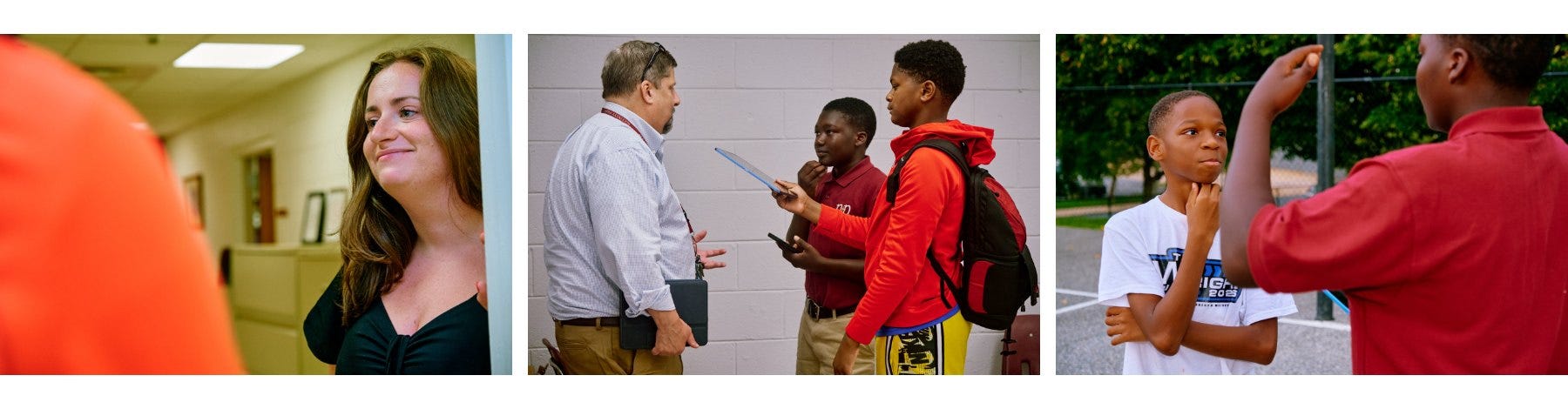
The students also helped tell this story. They took the lead in seeking out interviews and recording people’s testimonials about the new barbershop. While I photographed, they asked questions and gathered the voices you’re reading here. They invited people to explain what this space could mean for their school.
That student leadership is a big part of what makes this project meaningful for Dr. Alleyne. The boys had a role in documenting a space created for them. They were practicing how to approach someone, ask a question, and listen to the answer. Their curiosity helped bring this story together.
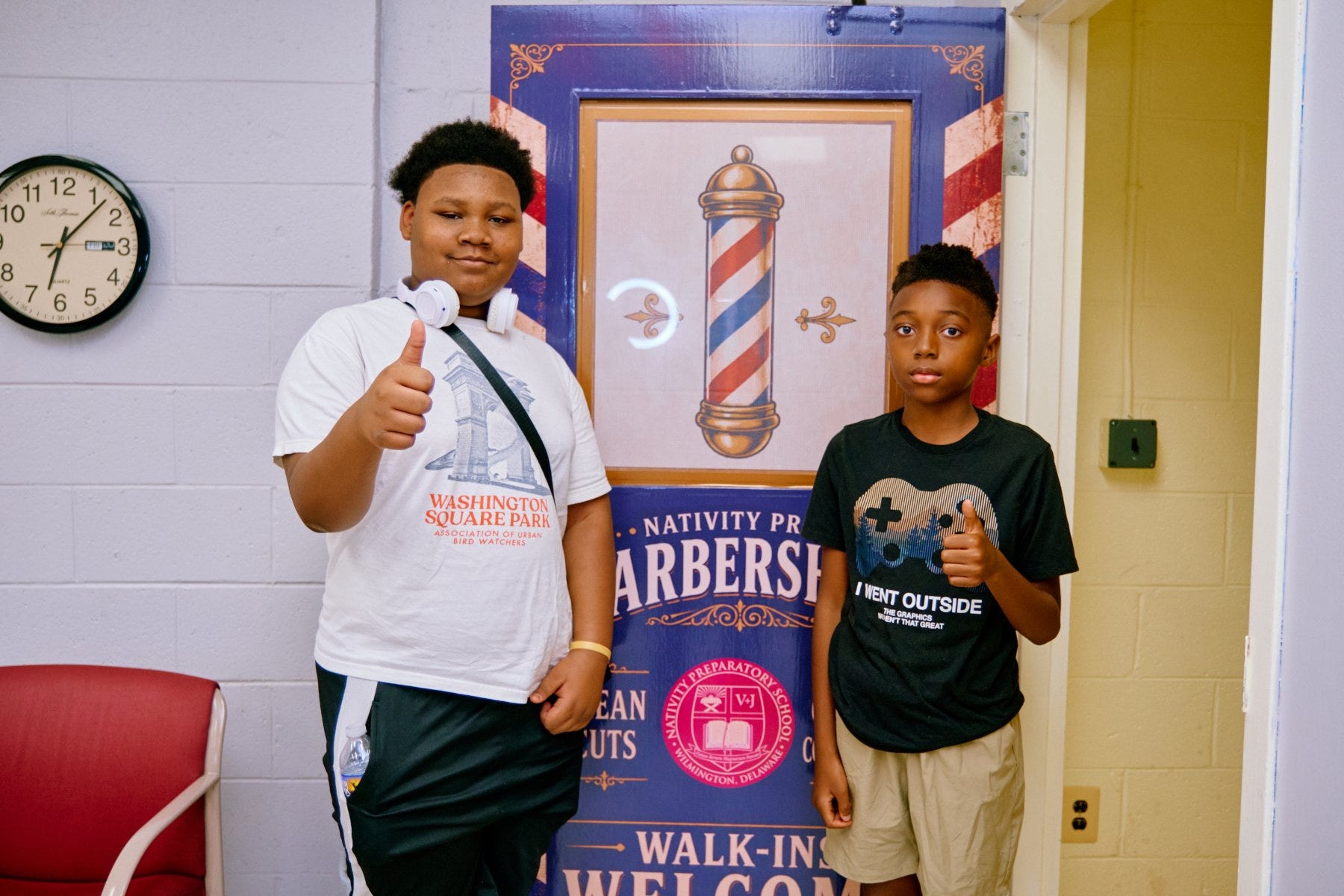
Together, their interviews and my photographs offer a fuller picture of the day. The images show the people and the place. The conversations help explain what this community wants the barbershop to become.
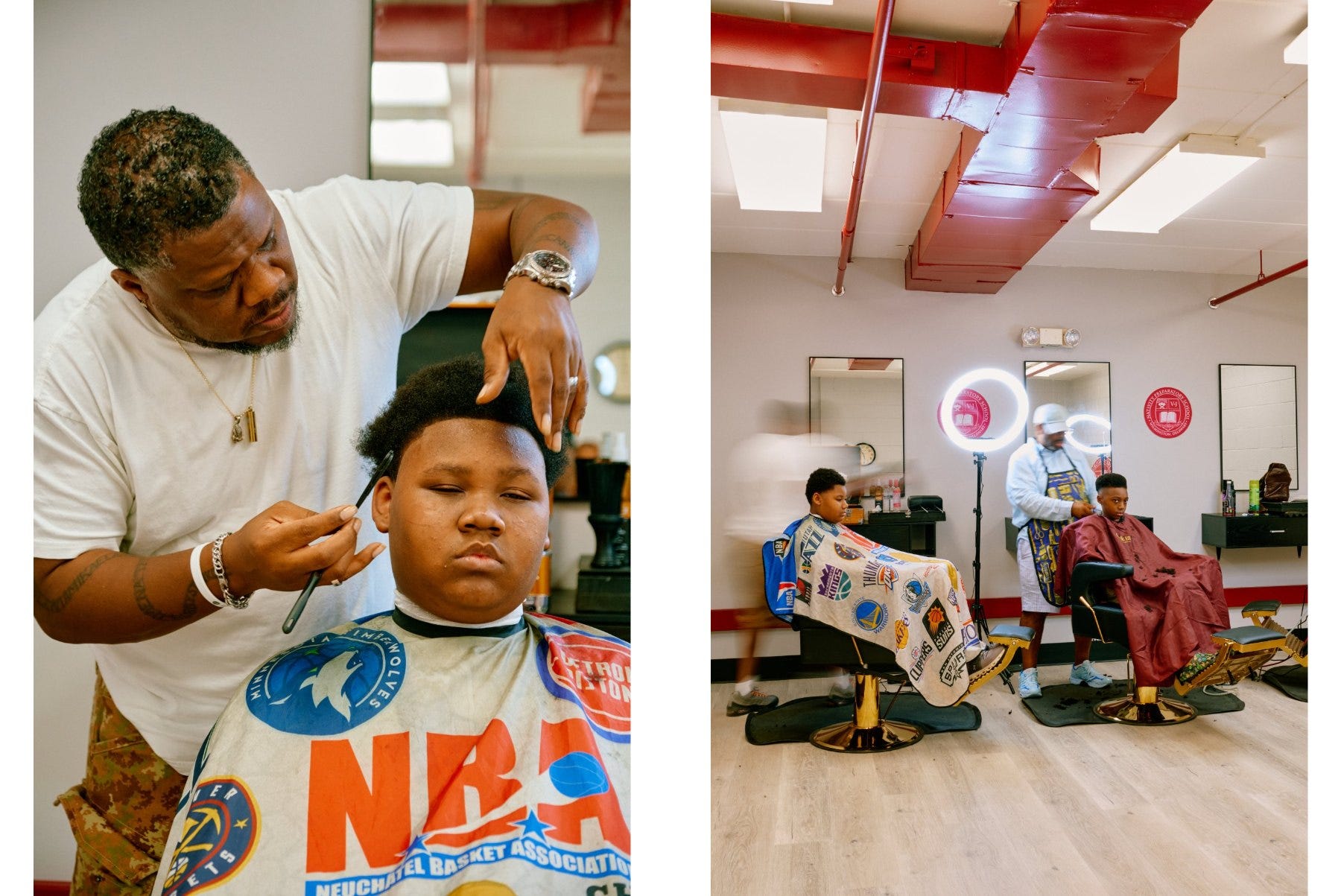
I keep coming back to what I said in my own interview: you might not be having a good day. You get a fresh cut. Now you’re feeling good.
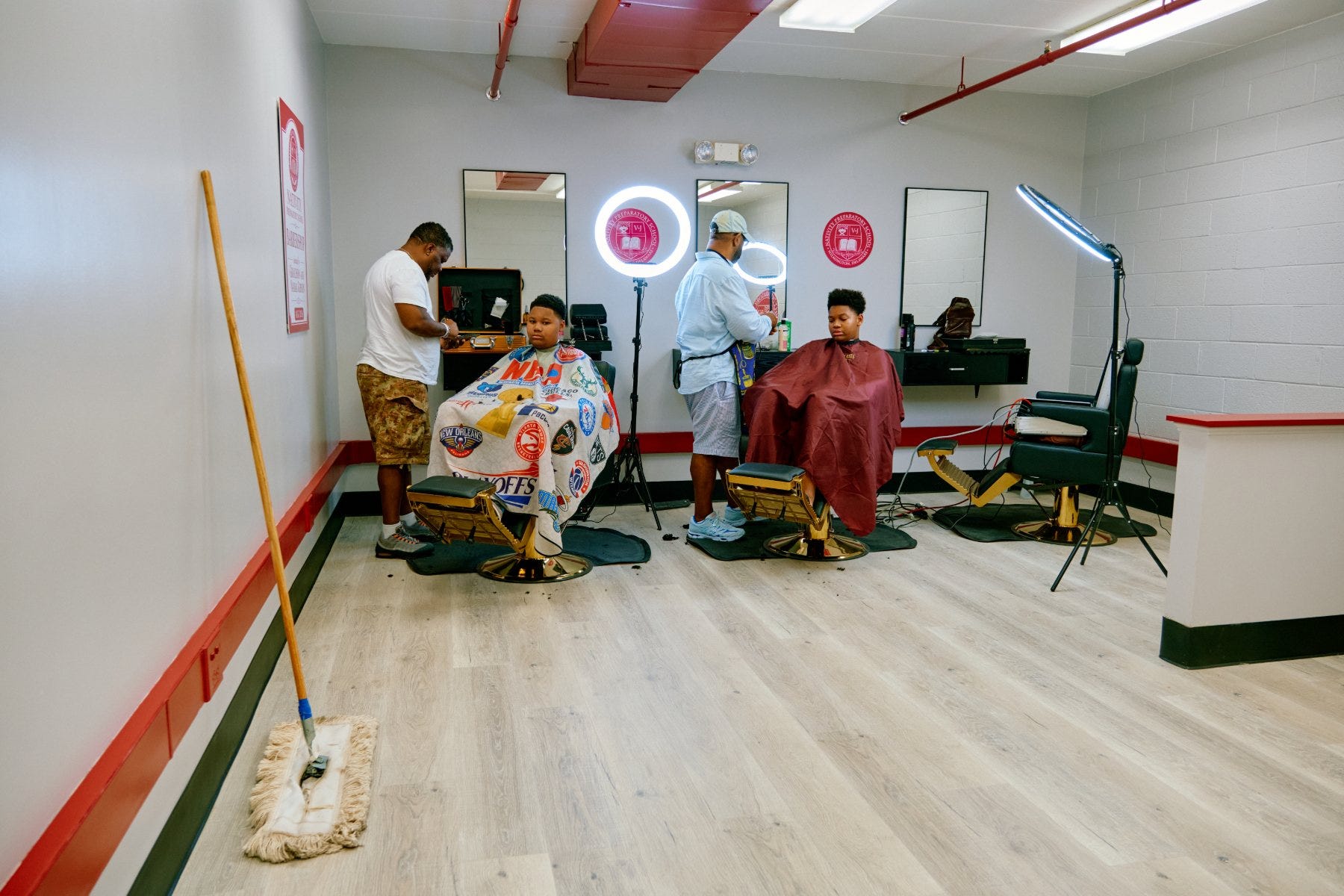
That’s a simple thing to want for a student. A moment to feel cared for. Someone willing to talk, or willing to work quietly. A place inside his school where that can happen again.
I know what it meant when a barber made time for me before my wedding. At Nativity Prep, I hope these boys come to know that feeling in their own everyday lives: someone is here, and they’ve made room for you.
Let’s create something worth remembering.
Planning a wedding, portrait session, event, or visual story? Contact Us to begin.
If this story moved you, subscribe to receive new photographs and stories from behind the lens.
Photographs and words © Errol E Photography. Please do not reproduce without permission

.